Monday, April 19, 2021

An Interesting and Difficult Galaxy Plus an Interesting Process

Let's start with the galaxy, which happens to be NGC4395 in the constellation of Canes Venatici. It's a very dim galaxy and in many ways the most difficult object I've had yet to process. It appears to be relatively nearby at around 14 million light years away, but has a low surface brightness. To me, that low surface brightness is interesting because is appears, by color, to be very active with blue stars. Blue stars are among the hottest stars and usually are bright. Rigel, in the constellation of Orion is a hot, blue star which is very bright. Because of the low surface brightness, and because of the blue being in the less responsive region of the camera, sort of a double whammy, even a couple of hours of light collection yielded a dim galaxy. Of course, the local light pollution works very much against acquiring dim data. Anyway, here it is.

NGC4395

The second issue of this post is something that I saw on the Youtube channel of Astrofarsography. He has done a few astro imaging tutorials using GIMP, which is one of the image processing programs I use. The basic idea is called Star Reduction, which in this context means reducing the brightness and (radial) size of stars with the purpose to emphasize something else, usually some nebulosity. Usually, stars are much brighter than the nebulosity and therefore more prominent. This technique lets the stars remain, but be less prominent, sort of fade into the background as it were, and allow the “something else” to “shine”. It's an artistic effect, but I think it has it's place. Used properly, I think I like it. The image is of NGC7380 in the constellation of Cepheus.


NGC7380 as initially processed.


NGC7380, same as above, after "star reduction"


Sunday, March 7, 2021

Sunny Days

 I finally have been looking at things astronomical; specifically, the sun. It seems like a very long time since I've been able to do that, and I've missed it. Ah, well. Such is life. At any rate, solar activity is starting to pick up in the new solar cycle 25. Here is what I was able to see on the morning of March 3rd.

This first image is of as much of the full face of the sun as I can image. It got the important pieces. The two white “spots” register as the sunspots 2807 and 2806 and show up as black in white light images of the sun. In general, things that show up as white in the Ha light my images are generally taken in are hotter than the surrounding surface of the sun; black is generally cooler. I really don't know why exactly the sunspots show up here as white, but they do. (I suspect it has something to do with the ability of the scope to tune to different frequencies of light.) Seen here are the two sunspots, a filament (the dark line) towards the top of the image, and a possible sunspot forming (or perhaps bubbling up) at the upper left of the image on the edge of the sun (about 10 o'clock).


2 Sunspots, 1 filament, and possible spot forming near 10 o'clock position.

The last two images show the prominences seen on the edge of the sun. The context of the images I believe to be roughly correct; the image with the prominence at the top of the sun is approximately at the north pole of the sun. That image is in color. The black/white image shows roughly the east and south of the sun, I think. I have difficulty determining the polar regions of the sun, so this is just a best guess. This is the most activity I've seen in quite some time.


 Prominences at north pole area of sun (I think).

A few more.


Sunday, January 31, 2021

Quick Entry

 On January 12, 2021I imaged 3 more Caldwell objects, C24, C51, and C67. I have to admit that some of the objects, which should be visible in my 8 inch scope from an urban setting, are at best difficult to image and see anything. C51 definitely qualifies as one of those. However, the one that was easiest to see/image was C67. It's an interesting galaxy. More specifically, the center is interesting. The first image is the full frame image; the second cropped to just the galaxy. See if you can see that the center of the galaxy seems to look like a “period” (dot) with 3 bright “comas” around it (plus, of course, the longer, dimmer arms).


C67

C67 aka NGC1097 and NGC1097A (the small one to lower left)

Saturday, January 30, 2021

Something Found

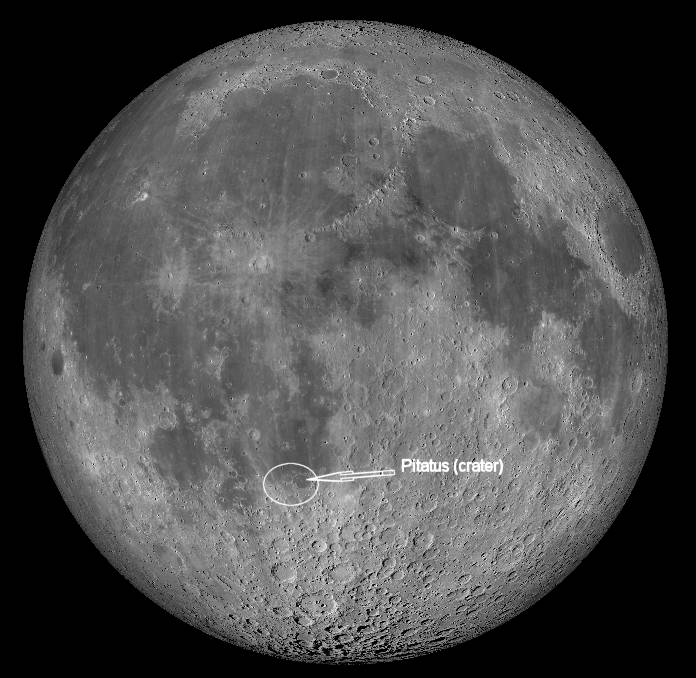
 One of the web sites I often check is call SpaceWeather.com. In their January 29th entry, they had a picture of a “concentric crater”, something I had never heard of before. A (very) little looking around the internet reveled a list of about 60 possible such craters, as well as the current theory of their formation, and it's not what you would first think. Apparently, the initial crater forms the initial bowl shape, then the inner ring is formed from underneath the bottom of the crater from magma pushing up on it creating the inner ring. Or, something like that. At least it isn't from a second, very well aimed meteor! Moving on. I decided to see if I might have accidentally imaged a concentric crater and, lo and behold, I did! It turns out to be in the same area of the moon as the one shown in the Spaceweather article. Very close, actually. So, I'll start with the larger view, thanks to Virtual Moon Atlas, and work our way down to the concentric crater, whose name is HESIODUS A.

Full moon


Area of moon where I found Concentric Crater (as did Spaceweather)

My image of same area above taken in 2016

Showing Pitatus Crater for reference to full moon image.

Hesiodus A, the concentric crater, enlarged from above image.


Friday, January 1, 2021

“Combo-bite”

When the grandkids were young, one of which still is, we often resorted to offering “combo-bites” to get them to eat some things they may not have otherwise eaten. Obviously, a combo-bite is a bite that contains more than one type of food. In today's entry, the combo-bite is a combination of two of my hobbies: amateur astronomy and amateur radio. I'll start with the radio, which was the reception of an image via slow scan TV from the International Space Station. The image was one of several sent from the ISS celebrating the 20th anniversary of amateur radio on the ISS, referred to not surprisingly as ARISS. This was the image sent at 10:46 EST (1546Z) and is one of many different images sent from the ISS. Obviously, the ISS needed to be flying overhead, so I used the Heavens-Above.com website to track the ISS to know when it was overhead and for how long it would be visible (usually about 10 minutes). The most I could get in any one pass was 2 images. I was able to receive 8 such images, 6 of which are different. Had I been willing to stay up around the clock (I wasn't), I could get a pass about every 90 minutes and received lots of images. However, I think the ISS was transmitting only about 6 to 10 different images, and I suspect it would have become something less than fun around 2AM. Anyway, here's the 12/26/2020 1546Z image, which was the best of the 8 received.


Image from International Space Station, via SSTV

The other image for today was inspired by the first activity. On the images received on December 29th, I noticed a fair amount of noise. At the time, I wondered if the noise could have been caused by solar activity. I remembered later that, while possible, it was highly unlikely to have been caused by the sun that day. None the less, I decided to look at the sun. There was more than usual activity, so I tried to image it. Results below.


Thursday, December 10, 2020

An Unusual Image AND Learning Experience

The subject of this image is NGC1893, located in the constellation of Auriga. The NGC object is an open cluster of stars, but has a Hydrogen-alpha region associated with it called, apparently, IC410 and SH 2-236. In my image, the predominant red region is IC410/Sh 2-236. Separating the open cluster from the background stars is more difficult.


NGC1893. What's that on the right side of the image?

So, what makes this image more interesting than usual? The story begins three nights before when I imaged the same object. However, I imaged at (binning of) 2x2 for the luminance channel, and 4x4 for the red, green, and blue channels. The idea was multiply the RGB channels by 2 to match the L channel, then combine like I usually do. Turns out, that's not possible. The image in 2x2 is 1663 pixels wide, while the 4x4 are 831 pixels wide. And never the twain shall meet. One lousy pixel off, and I had to throw the RGB channels away. Such is life. So, after finding this out, I re-shot the images, (LRG&B) again on the 8th. Turns out, that makes things more interesting. Lesson #1, don't shoot 2x2 and 4x4 and think they can be combined. In my experience, shooting stars with underlying or nearby nebulosity can be problematic; either the stars are over exposed, or it's extremely difficult to bring out the nebulosity. Or both. Bringing out the nebulosity was the case this time. Certainly not APOD quality, but probably as good as I can do under the circumstances. Now things start getting very interesting. Looking at the bottom right corner of the image, there is something that looks like a grey “wand” that changes to red, green, and finally blue. That really is a thing and it took me about a half day to find out what was going on. I figured it might be an asteroid moving across the field of view, since the entire run for shooting this image was about 2 ½ hours. I tried several web sites to try to determine what asteroid it could be, but to no avail. It turns out the at least one of the suggested web sites needed the coordinates of the center of the image to try to figure out what the moving object could be, so I tried my old friend ASTAP. In this case, it was ASTAP to the rescue. ASTAP can also figure out what comet of asteroid is in the image, so I downloaded the needed files and decided to try it. Turns out it wasn't an asteroid, but a comet. The line is comet C/2020M3 Atlas. So, why is it a line? The 1st hour of imaging was done in the L channel, hence the grey line. Then, 20 minutes each of red, green, and blue, which make up the remainder of the multicolored line. There you have it. Mystery solved, and I learned a method of identification of asteroids and comets in an image. (end of lesson #2) Below is the ASTAP plate solved image, showing what I found on ONE of the many L channel images. Notice the circle annotated D0 18. Another mystery and one with little information. As best I can find out, that refers to a Dolidze catalog, entry # 18, which, apparently is a catalog of open clusters (end of lesson #3). Who knew? (Well, I do now.)


ASTAP Plate solved image above.

Saturday, November 28, 2020

Tuning Effects

 One of the adjustments on my solar scope (Coronado Solar Max 2, double stack) effects the “tuning” of the scope. Truth is, that is the primary thing that can be adjusted, other than the focus. The object of tuning the scope is to allow the user to obtain more contrast on objects, eg sunspots. The tuning appears to be rather sharp. I often see the effect as the brightness spread across the face of the sun. Today, I took several images of the sun. However, a major difference today is the sun is too low to ride piggyback on the LX200GPS, so it is used as a stationary scope. Of course, that means that the sun drifts across the field of view of the scope. With no tracking (of the sun), stacking becomes more difficult and, generally, the images suffers from “motion blur”to some extent. With that in mind, what I want to show, is the effect of changing the tuning on the scope. As there is no method of measuring the difference in tuning, the best I can do is just show the effect. So, image 1 is with the tuning one way; image 2, another. Note the increased detail, however, in image 2. One of the main things the tuning does is change the center frequency of the light coming through the scope. Elements with doppler shift can disappear if tuned out of the bandpass of the scope. That's basically the effect seen in image 1. The bandpass was changed to favor the right hand side of the image, so elements barely visible in image 1 are now more easily visible in the 2nd image.


Image 1. Note the white, hotter, area around the sunspots and prominence about 5 0'clock.

Image 2. Much more to be seen.